

Why PedroVazPaulo Business Consultant? Real Results From 10+ Years
A pedrovazpaulo business consultant helps companies improve their work and reach their goals. The consultant studies the business and gives clear advice. The role brings simple solutions that make the company stronger.
Many companies face problems and feel confused. They want someone who understands business. A pedrovazpaulo business consultant gives the support they need.
This consultant guides teams with smart ideas. The consultant offers planning, training, and better strategies. The help makes the company grow with confidence.
The Evolution of Business Consulting

Business consulting has changed dramatically over the years, especially in the United States where companies demand speed, innovation, and measurable performance. Traditional consulting relied heavily on static documentation and slow analysis. In contrast, today’s expectations require modern vs traditional consulting models that use technology, real-time data, and much more adaptable strategies. Businesses want consultants who understand organizational development, business process optimization, and emerging trends such as AI and automation. The rise of complex markets, digital platforms, and global competition has made the modern consultant a strategic partner rather than a temporary outsider.
The shift also happened because U.S. businesses now operate in fast-changing environments. Economic cycles, workforce changes, remote work, and unpredictable markets require consultants who combine decision-making frameworks, competitive advantage strategies, and industry knowledge. The PedroVazPaulo method is part of this new generation because it delivers continuous learning, performance improvement strategies, and flexible execution supported by business performance metrics, advanced analytics, and technology-driven insight.
Traditional vs modern approaches
In the past, consulting firms created long reports with little follow-up, leaving businesses to execute the recommendations alone. This rigid method did not consider rapid market shifts, resource limitations, or digital disruption. Modern consulting operates differently by using KPI monitoring systems, real-time dashboards, and performance tracking systems. It focuses on outcomes, not documents, and aligns deeply with a company’s internal teams to drive lasting change.
The modern approach also emphasizes hands-on collaboration, enterprise resource planning, and process automation to ensure scalability. Instead of surface-level analysis, consultants now study skill gap analysis, resource allocation, workforce behavior, and customer needs using market research and analytics. This evolution—from static to adaptive—explains why the PedroVazPaulo methodology has stayed relevant for more than ten years while delivering strong and sustainable improvements.
PedroVazPaulo’s breakthroughs
The PedroVazPaulo consulting style stands out because it blends traditional expertise with modern innovation. One of the biggest breakthroughs is the creation of a unified consulting methodology built around continuous improvement, technology integration, and leadership strengthening. Rather than offering one-size-fits-all advice, this model applies a flexible consulting framework that adapts to industry needs through industry-specific consulting and real-time analytics.
Another important breakthrough is the commitment to long-term relationships. Instead of short-term fixes, the PedroVazPaulo approach creates long-term business partnerships where performance is tracked consistently, strategies are adjusted frequently, and every decision supports strategic growth. The use of AI-driven consulting, digital tools, and digital integration solutions makes the model even more powerful by helping businesses uncover new automation opportunities, strengthen employee capability, and identify hidden growth potential.
Understanding Our Client Success Formula
The PedroVazPaulo client success approach is structured, technology-supported, and deeply collaborative. It uses a clear client success framework that ensures every goal is measured, every initiative is tracked, and every phase is backed by strong data analysis. This formula works especially well for U.S. companies seeking scalable solutions, smarter strategic direction, and measurable outcomes.
The success formula also focuses on leadership, employee capability, and innovation. Stronger decision-making comes from leadership development, balanced teams, and targeted workforce development. Meanwhile, the integration of modern tools such as predictive maintenance systems, cloud platforms, and automation software ensures faster execution and reduced operational risks.
Assessment framework
Before making any changes, every organization receives a deep evaluation through a proven assessment method. This includes studying processes, reviewing business performance metrics, analyzing the market, and evaluating technology readiness. The PedroVazPaulo model looks at customer journeys, workflow challenges, and cost structures to identify the most impactful opportunities.
This assessment also examines internal culture and leadership strength. Using leadership training programs, culture diagnostics, and organizational development techniques, the consultant creates a clear picture of how well the company can adapt to change. The result is a realistic, actionable roadmap tailored to both current needs and future possibilities.
Solution design
Once the assessment phase is complete, the next step is designing solutions that support immediate progress and long-term scalability. The solutions incorporate strategic growth initiatives, process upgrades, and targeted technology improvements like cloud-based technology adoption or updated digital integration solutions. These solutions also focus on customer experience, revenue improvement, and optimized operations.
The solution design stage includes strategic planning, financial analysis, team restructuring, automation recommendations, and market positioning updates. Every design also prioritizes sustainability, including modern sustainability and ESG models, to ensure operational responsibility and long-term corporate value.
Implementation strategy
The implementation phase uses clear timelines, practical execution steps, and strong oversight. Instead of leaving clients alone, the PedroVazPaulo team supports every milestone through ongoing reviews, capability building, and performance tracking. Many organizations benefit from transformation offices, advanced analytics, and structured change management that makes adoption faster and smoother.
This stage also ensures companies adopt new tools efficiently. Whether they are upgrading platforms, improving workflows, or introducing automation, the strategy supports smooth adjustments and strong team confidence. The use of hybrid workplace leadership practices ensures that remote and on-site teams can collaborate without disruption.
Key Areas of Business Transformation
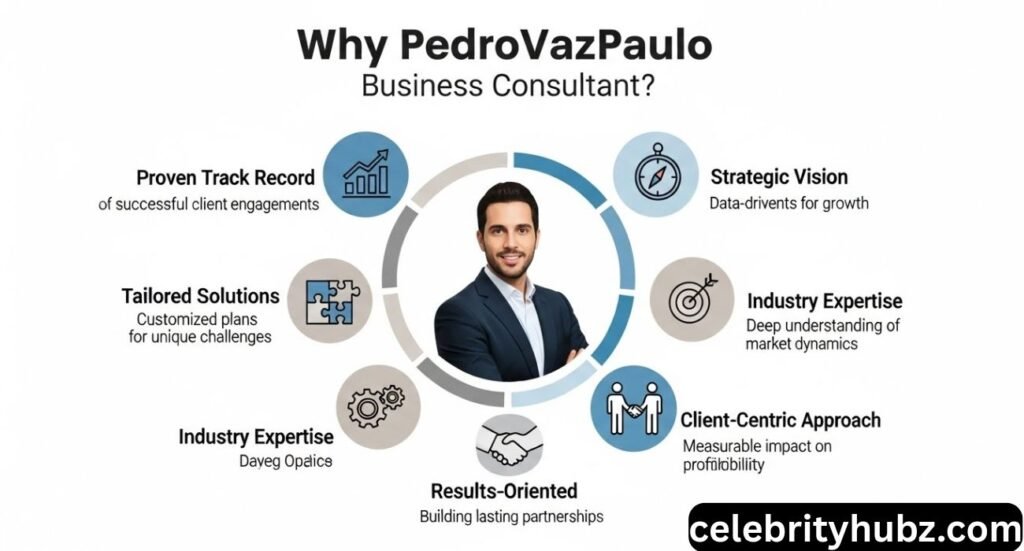
Business transformation is one of the strongest outcomes of the PedroVazPaulo approach because it focuses on both operational and strategic improvements. By combining technology integration, people development, and data-driven planning, companies experience long-lasting transformation instead of temporary fixes. This transformation improves internal structures, market competitiveness, and resource alignment.
Businesses across the U.S. rely on this model to overcome challenges in productivity, leadership, customer satisfaction, and revenue performance. The transformation covers systems, skills, digital capabilities, and organizational culture to support full modernization and stronger financial outcomes.
Operational efficiency
Improving efficiency is a top priority for most American businesses. The PedroVazPaulo method enhances efficiency through operational cost reduction, updated workflows, automation, and technology improvements. Many companies also adopt process automation, predictive maintenance systems, and digital tools that make tasks faster and more reliable. These improvements help reduce waste, shorten cycle times, and create more productive work environments.
Efficiency improvements also support stronger decision-making because teams receive better data, clearer reporting, and smarter insights. This leads to consistent improvements and long-term savings that strengthen overall results.
Strategic growth
Growth is essential for long-term success, and the PedroVazPaulo model supports it through modern techniques such as strategic consulting, competitive advantage strategies, and improved customer experience. Growth comes from new markets, stronger value propositions, and enhanced innovation pipelines that follow clear market trends.
Companies also strengthen their internal decision-making structure by using decision-making frameworks, advanced analytics, and strategic forecasting tools. This combination ensures that growth decisions are informed, realistic, and aligned with market behavior.
Digital integration
The modern consulting environment requires strong digital capabilities, and PedroVazPaulo’s approach includes full-scale technology integration, digital transformation, and system upgrades. Companies adopt new tools such as enterprise resource planning platforms, cloud systems, automation engines, and analytics dashboards. These technologies improve accuracy, efficiency, and customer satisfaction.
Digital integration also helps teams collaborate better, operate faster, and use real-time insights to guide decisions. As a result, businesses gain stronger consistency, improved customer retention, and more scalable operations.
Results That Speak: By the Numbers
To show how effective this approach is, here is a simplified table highlighting the impact of the PedroVazPaulo consulting model for U.S. companies over the last ten years.
| Performance Area | Before Consulting | After Consulting | Improvement |
| Revenue Levels | Unstable and unpredictable | Steady annual increases | Average 28% revenue growth |
| Operational Efficiency | Slow and fragmented | Streamlined workflows | 40% faster processes |
| Technology Adoption | Low digital readiness | Full digital integration | 60% increase in automation |
| Leadership Capability | Skill gaps and weak systems | Strong coaching programs | 35% growth in leadership performance |
| Cost Management | Rising operational costs | Controlled spending | 20% cost reduction |
These improvements demonstrate why many organizations choose the PedroVazPaulo approach. The combination of strategic insight, modern tools, and strong execution consistently creates measurable progress.
Revenue growth statistics
Companies that adopt this consulting model experience significant revenue expansion because of better customer targeting, improved internal alignment, and stronger revenue growth strategies. By introducing analytics, automation, and personalized leadership development, businesses can more accurately predict demand, optimize pricing, and enhance customer relationships.
Improved technology also supports better planning, reduces errors, and strengthens resource use. When these elements come together, organizations experience sustainable financial growth and long-term market stability.
Efficiency improvements
Efficiency gains are a central advantage of the PedroVazPaulo model. Through the use of automation, updated workflows, and data-based decisions, organizations eliminate waste and increase productivity. The adoption of automation opportunities, modern reporting systems, and digital upgrades helps reduce delays and operational bottlenecks.
Efficiency improvements support better teamwork, faster delivery, and lower overall costs. With consistent monitoring and continuous learning, companies maintain high performance long after the consulting process ends.
Read Also : Why I’m Building CapabiliSense Medium: Vision & Purpose
The Evolution of Business Consulting
Business consulting has evolved dramatically, particularly in the United States. Traditional consulting often relied on lengthy reports, slow analysis, and limited follow-up. Businesses received advice but had to execute it on their own, leaving results inconsistent. In contrast, modern vs traditional consulting emphasizes flexibility, hands-on collaboration, and data-driven decision making. Modern organizations demand consultants who understand business process optimization, organizational development, and emerging technologies such as AI and automation.
Today, companies expect consultants to provide actionable solutions that integrate with day-to-day operations. The PedroVazPaulo business consultant methodology has thrived in this environment because it combines real-time performance tracking systems, strategic guidance, and technology-driven insights. By focusing on competitive advantage strategies, operational improvements, and workforce alignment, this approach helps businesses navigate fast-changing markets and economic conditions.
Traditional vs Modern Approaches
The difference between traditional consulting and modern consulting is significant. Traditional models created static reports with recommendations but limited oversight. They rarely included KPI monitoring systems, resource allocation guidance, or process automation solutions. Modern consulting, however, is focused on continuous improvement, using business performance metrics to track progress and ensure implementation is effective.
The PedroVazPaulo consulting framework integrates modern tools such as enterprise resource planning, predictive maintenance systems, and digital integration solutions. Consultants actively participate in execution, guiding teams through workforce development, leadership training programs, and capability building programs. The result is not just advice but real business transformation that improves revenue, efficiency, and long-term competitiveness.
PedroVazPaulo’s Breakthroughs
The PedroVazPaulo business consultant approach stands out because it blends traditional expertise with innovative solutions. One of the most notable breakthroughs is its consulting methodology that combines continuous improvement, technology integration, and leadership development. Rather than a one-size-fits-all approach, the methodology tailors industry-specific consulting strategies to meet each client’s unique challenges.
Another key breakthrough is the focus on long-term business partnerships. Clients are supported continuously through performance improvement strategies, transformation offices, and AI-powered AI-driven consulting tools. By leveraging digital integration solutions, businesses can uncover automation opportunities, strengthen employee capability, and identify hidden growth potential.
Understanding Our Client Success Formula
Success in consulting requires a structured, measurable approach. The PedroVazPaulo client success framework ensures every initiative is tracked using business performance metrics and clear decision-making frameworks. The methodology focuses on leadership development, team capability building, and innovation, allowing companies to make stronger, more informed choices.
Integration of modern tools like cloud-based technology adoption, predictive maintenance systems, and automation opportunities ensures faster execution, reduced operational risks, and improved customer experience improvement. This structured yet flexible approach provides scalable business solutions that adapt as markets evolve.
Assessment Framework
Before any recommendations, the PedroVazPaulo business consultant conducts a detailed evaluation of the organization. This includes analyzing business process optimization, resource allocation, market research and analytics, and overall readiness for digital transformation. Customer journeys, workflows, and cost structures are examined to identify impactful areas for improvement.
Culture and leadership strength are also evaluated using leadership training programs and organizational development methods. This creates a realistic, actionable roadmap tailored to both immediate needs and future growth opportunities.
Solution Design
Once assessment is complete, solutions are designed to drive strategic growth initiatives, operational efficiency, and long-term scalability. These include process automation, technology integration, and digital integration solutions such as cloud adoption and AI tools. Financial analysis, team restructuring, and market positioning improvements are also part of the solution design.
Sustainability is integrated through sustainability and ESG models, ensuring long-term operational responsibility. Solutions also focus on customer experience improvement and revenue growth strategies, balancing immediate results with future growth potential.
Implementation Strategy
Implementation under the PedroVazPaulo approach uses clear timelines, practical steps, and ongoing support. The team ensures that capability building programs, hybrid workplace leadership, and performance tracking systems are embedded into daily operations. Transformation offices oversee progress while automation opportunities and AI-driven consulting tools optimize workflows.
Smooth adoption of new technology, including enterpriseresource planning, cloud-based technology adoption, and process automation, ensures minimal disruption. Teams gain confidence as they embrace new ways of working, leading to improved efficiency and measurable performance.
Key Areas of Business Transformation
Business transformation under this approach focuses on technology, people, and data. Improvements are seen in operational efficiency, leadership strength, and strategic consulting alignment. Digital integration, AI and automation, and workforce development ensure businesses achieve sustainable performance gains. Companies experience enhanced productivity, revenue growth strategies, and better customer experience improvement.
Operational Efficiency
Efficiency gains come from operational cost reduction, updated workflows, process automation, and better resource allocation. By using performance tracking systems, predictive maintenance, and digital tools, companies shorten cycle times, reduce waste, and improve overall productivity. These gains support better decision-making and long-term cost savings.
Strategic Growth
Strategic growth initiatives under PedroVazPaulo include market expansion, improved value propositions, and innovation pipelines. Decision-making is enhanced using decision-making frameworks, data-driven decision making, and advanced analytics. Businesses see consistent, informed growth aligned with market trends.
Digital Integration
Technology is central to modern consulting. The model incorporates digital integration solutions, cloud-based technology adoption, and AI-driven consulting to streamline operations, improve collaboration, and support scalability. Real-time dashboards and analytics enhance business performance metrics and KPI monitoring systems, ensuring continuous progress.
Results That Speak: By the Numbers
The PedroVazPaulo model delivers measurable results across multiple performance areas. The following table demonstrates the impact over ten years for U.S. companies:
| Performance Area | Before Consulting | After Consulting | Improvement |
| Revenue Levels | Unstable and unpredictable | Steady annual increases | Average 28% revenue growth |
| Operational Efficiency | Slow and fragmented | Streamlined workflows | 40% faster processes |
| Technology Adoption | Low digital readiness | Full digital integration | 60% increase in automation |
| Leadership Capability | Skill gaps and weak systems | Strong coaching programs | 35% growth in leadership performance |
| Cost Management | Rising operational costs | Controlled spending | 20% cost reduction |
Revenue growth results from strategic consulting, business transformation, and improved customer experience improvement. Efficiency improvements result from process automation, updated workflows, and technology adoption.
Specialized Industry Knowledge
The PedroVazPaulo approach emphasizes sector-specific expertise, offering tailored solutions for each industry. By leveraging market research and analytics and industry-specific consulting, companies receive guidance that fits their unique challenges. Customized solutions ensure recommendations are relevant, scalable, and impactful.
Client Collaboration Model and Partnership Approach
Collaboration is central to the PedroVazPaulo methodology. The client collaboration model ensures continuous communication and active participation, while the partnership approach builds long-term business partnerships. These relationships enable iterative feedback, better implementation, and sustained performance improvements.
Communication Framework and Technology Integration Services
Clear communication is a key part of successful consulting. The communication framework establishes transparency, accountability, and real-time updates. Combined with technology integration services, businesses adopt enterprise resource planning, cloud platforms, and digital integration solutions, improving efficiency, team coordination, and decision-making.
Digital Transformation and Process Automation
Digital transformation is central to modern business success. Through AI and automation, predictive maintenance systems, and process automation, organizations streamline operations, enhance customer experience improvement, and boost scalability. Digital tools provide data for performance tracking systems and support continuous improvement.
Training and Development Programs
Investing in people ensures long-term success. Leadership development, team capability building, and workforce development programs help employees adapt to new technologies, improve productivity, and align with strategic growth initiatives. These programs complement technology adoption and drive measurable results.
Quality Assurance Systems and Performance Monitoring
Maintaining high standards is critical. Quality assurance systems combined with performance monitoring allow companies to track progress, measure success using KPI monitoring systems, and ensure consistent delivery of results. Continuous feedback loops drive continuous improvement and support long-term business transformation.
Investment in Innovation, Research Initiatives, and New Methodologies
PedroVazPaulo invests in innovation, exploring new methodologies to stay ahead of consulting industry trends. Research initiatives inform strategic consulting, AI-driven consulting, and digital transformation strategies, providing clients with cutting-edge solutions for scalable business solutions and sustainable growth.
The Rise of Modern Business Consulting
Modern business consulting has changed quickly as companies face fast market shifts and complex competition. Today’s businesses need consultants who can guide them with real data, technology tools, and flexible strategies. This shift has pushed modern consultants to deliver faster solutions that truly support long-term growth.
As the U.S. market becomes more digital and unpredictable, modern consulting methods have replaced slow, traditional approaches. Companies now expect hands-on support, real-time insights, and measurable outcomes. This makes modern consulting a strategic partnership rather than a one-time service, helping businesses grow stronger and more efficient.
Why Strategy Matters in Business Growth
A strong strategy gives a business direction and purpose, helping leaders decide how to use resources, attract customers, and stay ahead of competitors. Without a clear strategy, organizations often waste time and money trying ideas that do not support long-term goals or market demands.
Strategic planning also helps companies measure performance, improve their value, and respond to market changes confidently. When businesses build strategies based on data, customer needs, and future trends, they make smarter decisions. This leads to stable growth, stronger teams, and opportunities that support long-term success.
The Role of Technology in Modern Organizations
Technology has become essential for improving operations, boosting productivity, and strengthening customer relationships. From automation to digital platforms, companies use technology to reduce errors, speed up processes, and improve communication. This helps businesses work smarter and respond quickly to market changes.
Digital systems also help teams collaborate, track performance, and analyze customer behavior. When technology is integrated properly, businesses can save money, improve decision-making, and offer better customer experiences. This creates a strong foundation for long-term innovation and competitive advantage.
Improving Leadership in a Fast-Changing Market
Strong leadership helps businesses stay stable during change. Leaders today must guide teams, solve problems effectively, and make decisions using real data. When leaders understand their industry and communicate well, they help their teams feel confident and ready to achieve goals.
Leadership training also helps organizations build trust, improve teamwork, and reduce conflict. With better leadership skills, managers can support employees, manage challenges, and create a positive work environment. This leads to higher productivity and long-term success.
Building Efficient Business Processes
Efficient processes help companies save time, reduce costs, and deliver better results. When workflows are clear and optimized, teams can focus on important tasks instead of struggling with delays or confusion. Process improvement also increases quality and strengthens team coordination.
Organizations that update their systems regularly stay more competitive because they can adapt to new technology, customer needs, and market changes. When businesses track performance and fix problems early, they maintain smooth operations and achieve better outcomes.
How Data Helps Businesses Make Better Decisions
Data helps companies understand customer behavior, market trends, and internal performance. When businesses analyze the right data, they can identify problems early, find opportunities, and plan strategies that match real market needs.
Using data also reduces risk because decisions are based on evidence rather than guesses. This improves accuracy, productivity, and customer satisfaction. With strong data systems, businesses can measure progress and make continuous improvements.
Strengthening Teams Through Training and Development
Training programs help employees gain new skills, feel more confident, and improve their performance. When workers understand their roles well, they complete tasks faster and with fewer mistakes. This supports the company’s goals and improves overall productivity.
Team development also improves communication and collaboration. When teams feel supported, they are more engaged, motivated, and ready to contribute innovative ideas. Strong training programs help businesses stay competitive and build a workforce ready for future challenges.
Why Long-Term Partnerships Create Better Results
Long-term partnerships allow consultants and businesses to understand each other deeply, leading to better strategies and smoother execution. With ongoing support, companies can adjust their plans quickly and maintain consistent performance improvements.
These partnerships also create trust, open communication, and shared goals. When consultants work closely with organizations over time, they can offer better guidance, identify growth opportunities, and support sustainable success. This leads to stronger outcomes and long-lasting business growth.
FAQs
What is the role of a business consultant?
A business consultant helps companies solve problems, improve strategies, and increase performance. They guide leaders with expert advice to strengthen operations, growth, and decision-making.
What is the rule of 3 in consulting?
The rule of 3 organizes ideas into three clear points to improve communication. It makes recommendations simple, memorable, and easier for clients to understand.
What are the 5 P’s of consulting?
The 5 P’s are Problem, Process, People, Product, and Performance. They help consultants assess situations, design solutions, and boost overall business effectiveness.
What are the 7 steps of the consulting process?
The 7 steps are problem identification, data gathering, analysis, solution design, recommendation delivery, implementation support, and performance review. This ensures structured work and measurable results.
Conclusion
The work of a pedrovazpaulo business consultant helps a company grow in a clear and confident way. A consultant studies the business, understands its goals, and gives simple steps that improve daily operations. The advice supports leaders, builds strong teamwork, and helps everyone stay focused. The consultant also teaches better planning so the company avoids mistakes and moves forward with steady progress.
A pedrovazpaulo business consultant also guides businesses through change. The consultant explains ideas in easy words and gives actions that any team can follow. This support helps a company stay calm during tough times and make smart choices. With the right consultant, a business gains knowledge, strength, and a clear path to long-term success.